What exactly is the ICC? Put simply, the International Criminal Court (ICC) is a permanent court set up to prosecute individuals who are accused of war crimes, crimes against humanity, and genocide. It is an international treaty-based organization, governed by the Rome Statute of 1998. The court began functioning in 2002 after the minimum 60 states ratified the statute
Where does the ICC get its authority? The mandate of the court is centered around the Rome Statute, an international treaty agreement. In order for the ICC to prosecute crimes committed in a particular state's territory, that state must first ratify the treaty and accept the court's jurisdiction.
Is the ICC part of the United Nations system? The simple answer is no--the court is an independent institution. But the UN is an integral part of the court's history, its present, and its future. The Rome Conference that established the ICC was mandated by a UN General Assembly Resolution. The UN has long considered and encouraged a permanent international court, but the idea was buried during the confusion of the Cold War period. Only in the 1990s could the Assembly pursue the court's establishment. The United Nations continues its relationship with the court, though the institutions themselves are separate.
What about the UN Security Council? The court was carefully formed in relation to the Council in order to ensure a separation of powers and a minimization of political bias. Still, the UNSC maintains some involvement in court activities. While unable to veto decisions of the ICC or oversee it directly, the Security Council may refer cases to the court for prosecution. It may also, in the interests of global security, request that the court delay trial proceedings of an individual.
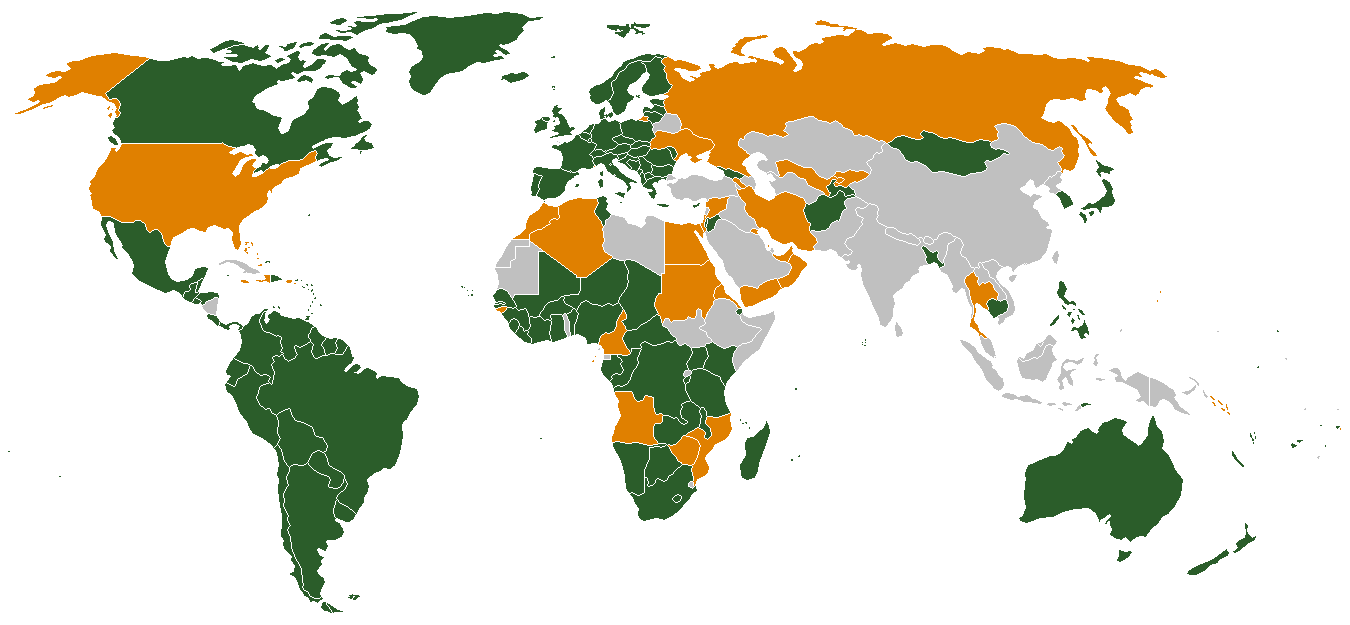
How many countries have ratified the Rome Statute? Currently 121 states have ratified the treaty and are members of the court (see map here--members represented in green). This group of countries makes up the Assembly of States Parties, which oversees the court and makes decisions including: the election of court prosecutor and judges, review of elected officials and appointments, court funding, and changes or amendments to the Rome Statute.
Has the United States joined the court? Unfortunately, no. The Rome Statute was signed under the Clinton administration, but was never submitted for ratification. When the Bush administration entered into office, the US developed a hostile position against the ICC, going so far as to "unsign" the treaty. This caused tension between the United States and many supporters of the court, including most of Europe. Since then, the Obama administration has resumed relations with the ICC, but no action has been taken to join.
Doesn't the ICC undermine national jurisdiction? No--in fact, the court encourages primary national jurisdiction through the principle of complementarity. This means that the ICC is a complement to national courts--a sort of last resort. It acts only when national judicial institutions are unable or unwilling to conduct fair trials. In general, national trials are cheaper and faster than international ones, so deferral to state courts was consciously written into the Rome Statute.
Does the ICC protect the rights of the accused? Yes. The Rome Statute contains one of the most extensive lists of rights and due process protections in the world; some have suggested even more comprehensive than the US Bill of Rights. It includes the presumption of innocence, assistance of counsel, right to remain silent, right to examine witnesses, right to a speedy and public trial, protection against double jeopardy, and many others.
Where does the ICC get its authority? The mandate of the court is centered around the Rome Statute, an international treaty agreement. In order for the ICC to prosecute crimes committed in a particular state's territory, that state must first ratify the treaty and accept the court's jurisdiction.
Is the ICC part of the United Nations system? The simple answer is no--the court is an independent institution. But the UN is an integral part of the court's history, its present, and its future. The Rome Conference that established the ICC was mandated by a UN General Assembly Resolution. The UN has long considered and encouraged a permanent international court, but the idea was buried during the confusion of the Cold War period. Only in the 1990s could the Assembly pursue the court's establishment. The United Nations continues its relationship with the court, though the institutions themselves are separate.
What about the UN Security Council? The court was carefully formed in relation to the Council in order to ensure a separation of powers and a minimization of political bias. Still, the UNSC maintains some involvement in court activities. While unable to veto decisions of the ICC or oversee it directly, the Security Council may refer cases to the court for prosecution. It may also, in the interests of global security, request that the court delay trial proceedings of an individual.
How many countries have ratified the Rome Statute? Currently 121 states have ratified the treaty and are members of the court (see map here--members represented in green). This group of countries makes up the Assembly of States Parties, which oversees the court and makes decisions including: the election of court prosecutor and judges, review of elected officials and appointments, court funding, and changes or amendments to the Rome Statute.
Has the United States joined the court? Unfortunately, no. The Rome Statute was signed under the Clinton administration, but was never submitted for ratification. When the Bush administration entered into office, the US developed a hostile position against the ICC, going so far as to "unsign" the treaty. This caused tension between the United States and many supporters of the court, including most of Europe. Since then, the Obama administration has resumed relations with the ICC, but no action has been taken to join.
Doesn't the ICC undermine national jurisdiction? No--in fact, the court encourages primary national jurisdiction through the principle of complementarity. This means that the ICC is a complement to national courts--a sort of last resort. It acts only when national judicial institutions are unable or unwilling to conduct fair trials. In general, national trials are cheaper and faster than international ones, so deferral to state courts was consciously written into the Rome Statute.
Does the ICC protect the rights of the accused? Yes. The Rome Statute contains one of the most extensive lists of rights and due process protections in the world; some have suggested even more comprehensive than the US Bill of Rights. It includes the presumption of innocence, assistance of counsel, right to remain silent, right to examine witnesses, right to a speedy and public trial, protection against double jeopardy, and many others.

No comments:
Post a Comment